
How do I remove an item from Inventory?
There are times when your unsold inventory in Seller Ledger won't match what you actually have on hand. Maybe an item was lost or damaged, maybe you decided to keep it for yourself, maybe you gave it away as part of a promotion, or maybe you sent it back to the vendor.
Whatever the reason, Seller Ledger makes it easy to remove the item from your inventory — and to record the removal in a way that keeps your books (and taxes) accurate.
How to remove stock
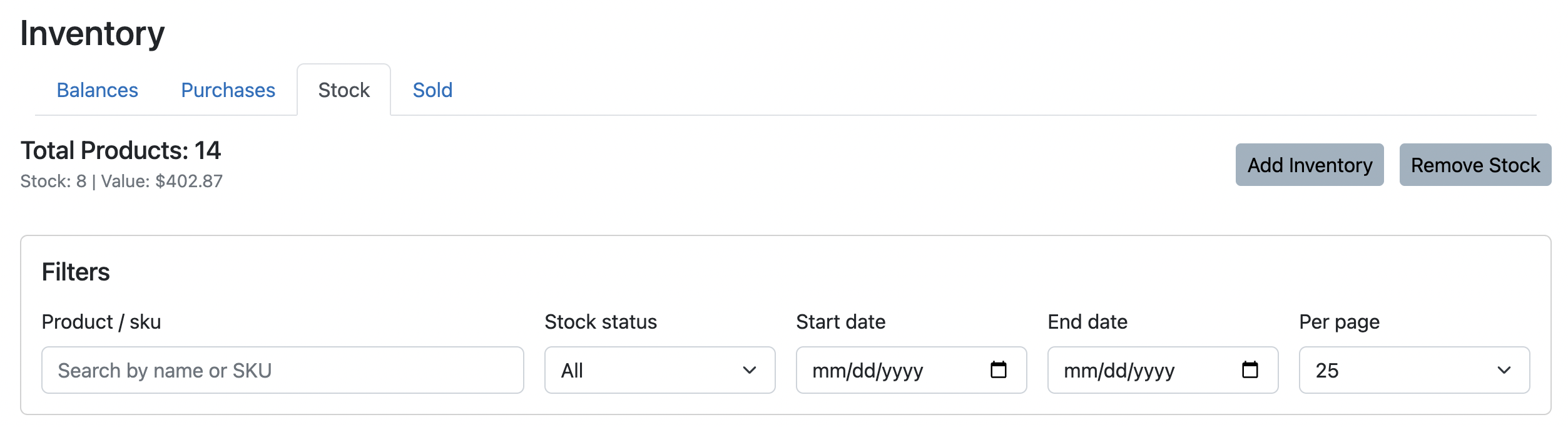
- Go to the Inventory tab and click the Stock sub-tab.
- Click the Remove Stock button in the upper right.
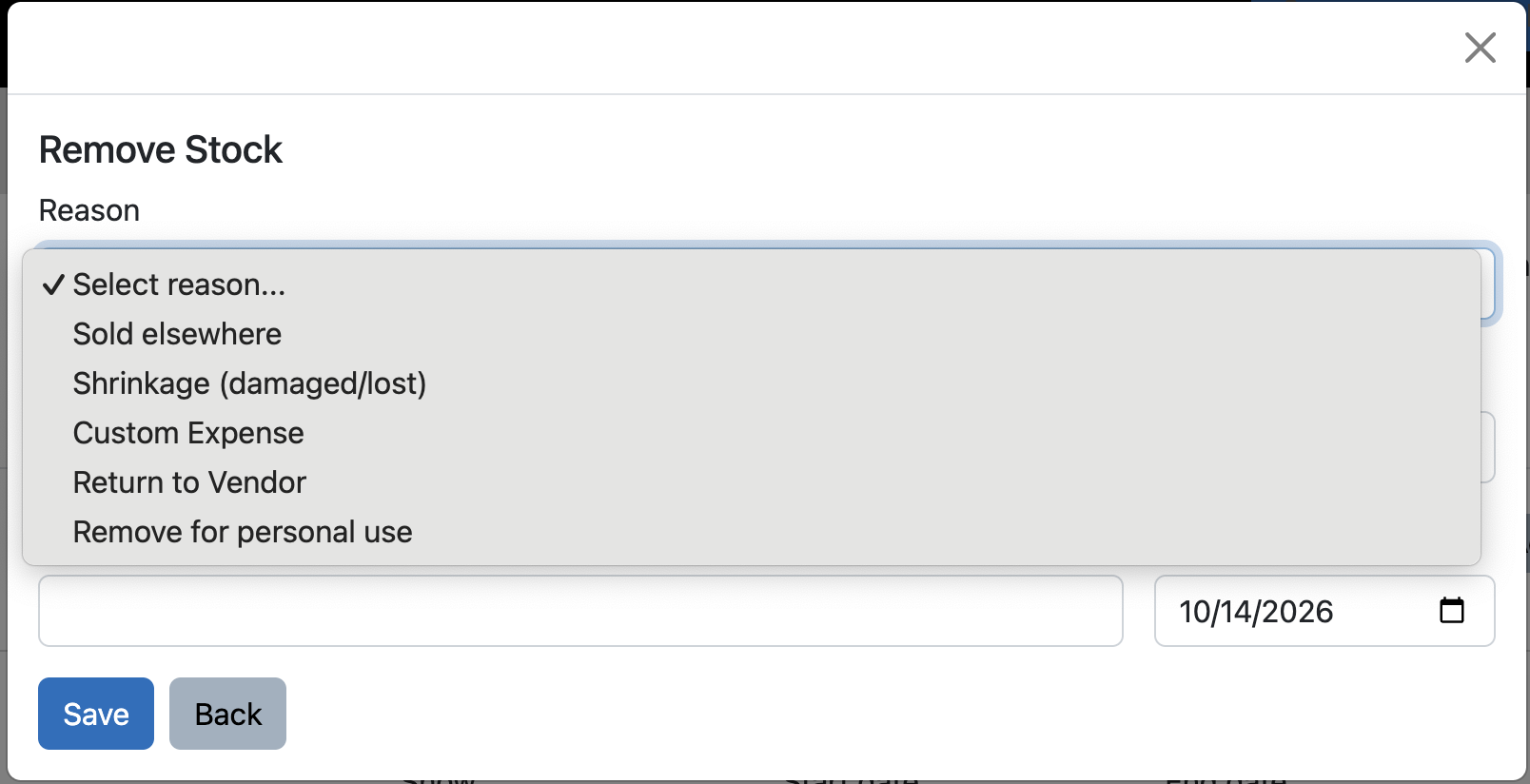
- In the pop-up, choose a reason for the removal (see the section below for what each one does).
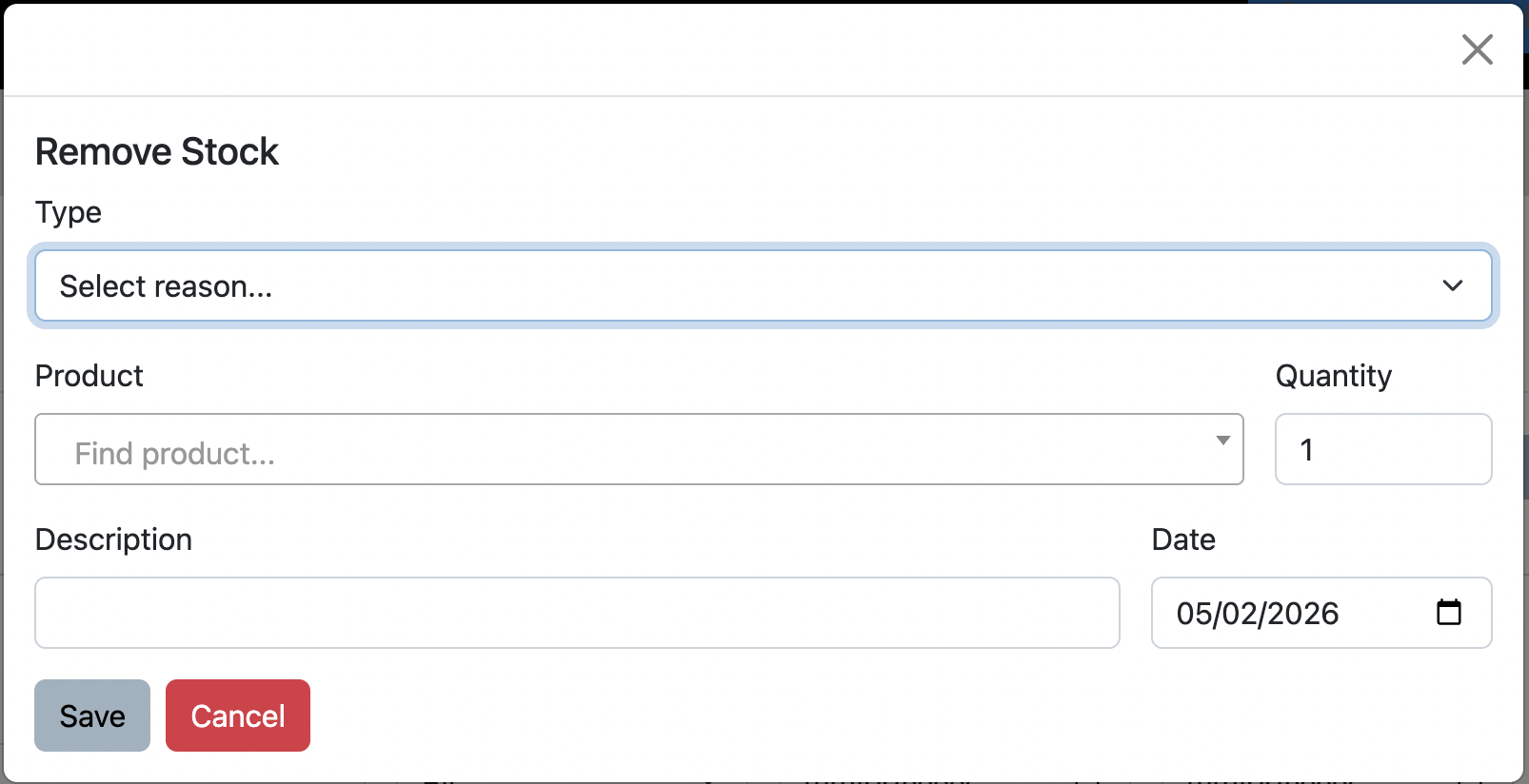
- Choose the item you'd like to remove and enter the quantity.
- Click Save.
Choosing the right reason
The reason you select matters, because it tells Seller Ledger how the removal should be reflected in your reports and on your taxes. Here are your options:
-
Sold elsewhere
Use this when you sold an item, but aren't able to attach that item to the sale through traditional means in the software. This is often used when you sell through a channel that doesn't connect to seller Ledger. Seller Ledger will reduce your inventory balance and increase your Cost of Goods Sold.
-
Lost, damaged, or shrinkage
Use this when an item is no longer sellable due to loss, damage, theft, or general shrinkage. Seller Ledger will reduce your inventory balance and increase your Cost of Goods Sold, since the IRS treats this kind of loss as part of COGS.
-
Personal use
Use this when you're pulling an item out of inventory to keep for yourself (or for someone in your household). Because the item is no longer part of the business, it shouldn't count as a business expense. Seller Ledger will reduce your inventory balance, but it will not add the cost to Cost of Goods Sold or any other business expense category. Behind the scenes, this is treated similarly to an owner's draw.
-
Custom business expense
Use this when the item leaves inventory for a business reason other than a sale — for example, giveaways, promotional samples, donations to influencers, or items used as props. When you choose this option, you'll be asked to select which expense category the cost should go to (for example, Advertising for a giveaway, or Office expense for supplies you ended up using yourself in the business). Seller Ledger reduces inventory and records the cost as the expense category you choose, instead of as Cost of Goods Sold.
-
Return to vendor
Use this when you're sending the item back to the supplier you bought it from. Seller Ledger will reduce your inventory balance, and the cost will be recorded against Owner's Equity rather than as an expense or COGS. This keeps your books accurate without overstating expenses, since the item was never actually sold or consumed by the business. If you receive a refund from the vendor in a connected bank or credit card account, you can categorize that refund as a transfer or to the appropriate equity account so the two sides match up.
Why the reason matters
Each of these options affects different parts of your reports:
- Cost of Goods Sold (Schedule C, Line 4): affected by Lost, damaged, or shrinkage.
- Other business expense categories (Schedule C, various lines): affected by Custom business expense, depending on the category you pick.
- No tax impact (not deductible): Personal use and Return to vendor.
In all cases, your inventory balance on the Balances tab will decrease by the cost of the item(s) you removed.
A quick example
Let's say you bought 10 t-shirts at $8 each for a total of $80 in inventory. Later in the year:
- 1 shirt is damaged in storage → Lost, damaged, or shrinkage ($8 added to COGS)
- 1 shirt you decide to wear yourself → Personal use ($8 removed from inventory, no expense recorded)
- 2 shirts you give away at a trade show → Custom business expense → Advertising ($16 recorded as Advertising)
- 1 shirt sent back to the supplier → Return to vendor ($8 removed from inventory, recorded against Owner's Equity)
After all of these, your inventory balance for those shirts drops by $40, and each removal lands in the correct place on your Profit & Loss and Schedule C — without any extra journal entries on your part.
If you're unsure which reason fits your situation, we recommend checking with your tax professional, especially for larger removals.